
Patios Wirral – Professional Patio Installation Across the Wirral
If you are looking for professionally installed patios in Wirral, we create attractive, practical outdoor spaces designed around your home, garden and the way you want to use it.
A well-designed patio can completely change a garden. Whether you want somewhere for outdoor dining, a comfortable seating area, a low-maintenance space for entertaining or a new paved area connecting your home to the garden, the right patio can make your outdoor space far more usable.
We install patios using a range of paving options, including porcelain paving, Indian sandstone and other paved patio solutions, with designs available for both traditional and contemporary properties.
Our patio installation services cover the whole Wirral peninsula, including Heswall, West Kirby, Hoylake, Greasby, Irby, Pensby, Bebington, Bromborough, Birkenhead, Wallasey, Moreton, Upton, Prenton, Meols, Thingwall, New Brighton and surrounding areas.
If you are planning a new garden patio, contact us today for a free, no-obligation patio quote in Wirral.
Professional Patio Installers in Wirral
Every garden is different, which is why a patio should be designed around the individual property rather than treated as a standard paved rectangle.
As experienced patio installers in Wirral, we look at the complete outdoor area before work begins. This includes the size and shape of the garden, existing ground levels, access, drainage, doors, walls, paths and any landscaping that will remain.
We also consider how you want to use the finished patio.
Some customers want a large entertaining space capable of accommodating a dining table and outdoor furniture. Others prefer a smaller patio surrounded by lawn and planting.
A patio can also form part of a wider garden layout incorporating:
- Garden paths
- Steps
- Raised areas
- Seating zones
- Decorative borders
- Lawns
- Garden rooms
- Pergolas
- Outdoor kitchens
- Planting areas
Planning these elements together can help create a garden that feels connected and carefully considered.
Porcelain Patios Wirral
Porcelain patios in Wirral are particularly popular with homeowners looking for a clean, contemporary garden finish.
Outdoor porcelain paving is manufactured to provide a relatively consistent colour, texture and size, making it ideal for modern patio layouts with clean lines.
There are many colours and finishes available, including greys, warmer neutral shades and stone-effect designs.
Porcelain can work especially well alongside modern extensions, rendered walls, garden rooms and large patio doors. It can also be used to introduce a contemporary element to an older property.
Larger format paving can give the patio a spacious appearance, while carefully planned joints create a neat and structured finish.
One of the reasons homeowners choose porcelain is its relatively low-maintenance nature. When correctly installed and maintained, it can provide an attractive outdoor surface for dining, entertaining and everyday garden use.
If you are considering porcelain paving in Wirral, we can discuss suitable layouts and paving styles for your property.
Indian Stone Patios Wirral
For homeowners who prefer a more natural appearance, Indian stone patios in Wirral remain an excellent choice.
Indian sandstone is a natural material, meaning individual slabs contain variations in shade, markings and texture. Rather than every paving slab looking identical, the variation gives a finished patio individual character.
Popular tones can include warm buff, brown, golden and grey shades.
Indian sandstone works particularly well with traditional brick properties, mature gardens, lawns, timber fencing and established planting.
It can also be incorporated into more modern garden schemes. Grey Indian sandstone, for example, can create a natural surface while still complementing contemporary landscaping.
Indian stone patios are often laid using mixed paving sizes, producing a varied layout that suits the character of natural stone.
For homeowners searching for Indian stone paving in Wirral, we can install patios, paths, steps and adjoining garden areas to create a coordinated outdoor design.
Patio Designs for Wirral Homes
One of the advantages of working locally is understanding just how varied Wirral properties and gardens can be.
There is a significant difference between creating a patio for a compact terraced property and landscaping the garden of a larger detached home.
In parts of Birkenhead, Wallasey, Prenton and Bebington, gardens may be narrower or more compact. A carefully proportioned patio can make efficient use of the available area without overwhelming the rest of the garden.
Properties in areas such as Heswall, Irby, Greasby and West Kirby may offer larger outdoor spaces where it is possible to incorporate multiple patio areas, connecting paths or changes in level.
Homes in Hoylake, Meols, Moreton, Pensby, Upton and Bromborough also vary considerably in age, garden size and architectural style.
Rather than using the same patio design everywhere, we can plan the paving around the actual garden.
Patios for Small Wirral Gardens
A smaller garden can still benefit significantly from a professionally installed patio.
In fact, careful paving design can make a compact outdoor area much more useful.
The key is choosing an appropriate patio size and layout.
Too much paving can make a small garden feel hard and enclosed, while too little may not provide enough practical space for furniture.
A simple patio positioned next to the house can provide enough room for a table and chairs while retaining lawn or planting elsewhere in the garden.
Alternatively, some compact gardens work well with a largely paved layout combined with raised beds, pots and decorative features.
Choosing lighter paving can sometimes help create a brighter visual appearance, while consistent lines can make the garden feel organised.
Patios for Larger Gardens
Larger Wirral gardens create different design opportunities.
Instead of installing one large uninterrupted paved area, the garden can sometimes be divided into distinct zones.
For example, there may be a main patio directly outside the house for dining, with a second seating area positioned to take advantage of another part of the garden.
A paved path can connect the areas while lawn, borders or decorative stone provide separation.
Patios can also be incorporated around garden rooms, pergolas and other structures.
The aim should be to create outdoor spaces that have a purpose rather than simply paving as much of the garden as possible.
Patios for Outdoor Dining and Entertaining
A patio can effectively create an additional living area outside your home.
If outdoor dining is a priority, the paving needs to provide enough space for the table, chairs and movement around them.
For entertaining, a larger patio may offer room for seating, dining furniture and a barbecue or outdoor cooking area.
Position is also important.
Many homeowners prefer their main patio directly outside the kitchen or living area so it is easy to move between indoor and outdoor spaces.
Homes with bifold or sliding doors can particularly benefit from a carefully positioned patio, creating a stronger connection between the house and garden.
Garden Paths and Matching Paving
A patio does not have to exist independently from the rest of the garden.
Using matching or complementary paving for paths can help connect different areas.
A paved path might lead from the main patio to a garden room, shed, side gate or secondary seating space.
This can be particularly useful during wetter weather, providing a practical route through the garden without having to walk across the lawn.
Paths can be straight and contemporary or follow a softer route through landscaped planting, depending on the style of the garden.
Using the same porcelain or Indian stone as the main patio can create consistency throughout the outdoor space.
Patio Steps and Different Garden Levels
Many gardens across Wirral have changes in level.
Rather than viewing slopes and different heights as a problem, they can sometimes be incorporated into the patio design.
A raised patio close to the house can create a defined entertaining area, with steps leading down towards a lawn or lower seating space.
Likewise, a sloping garden can be divided into levels to make different sections more practical.
When steps are required, they should be considered as part of the overall layout from the beginning.
Paving, walls, drainage and level changes all need to work together to create a finished garden that looks cohesive.
Correct Preparation for a New Patio
A professional-looking patio requires proper preparation beneath the visible paving.
Depending on the existing garden, preparation may include removing old paving, decking, turf or other surface materials before excavating the area.
A suitable foundation can then be created before the chosen patio slabs are installed using an appropriate method.
The exact preparation required will vary depending on ground conditions, paving material and site layout.
Levels are particularly important.
The new patio needs to work correctly with surrounding doors, walls, drainage points and adjoining areas.
Good groundwork is essential because problems beneath the surface can affect the paving later.
Patio Drainage in Wirral
Drainage should be considered as part of every new patio installation.
Wirral gardens are exposed to the same changeable and often wet conditions found throughout the North West, so patio surfaces need to manage rainfall effectively.
Suitable falls can help direct surface water away from the house and prevent unnecessary pooling.
Existing garden levels, drains and surrounding surfaces all influence the appropriate approach.
On some projects, additional drainage features may be required.
Considering drainage before paving is installed is far better than attempting to correct problems once the patio is complete.
Choosing the Right Patio Paving
The best paving for your patio will depend on the style you want and the character of your property.
Porcelain paving is particularly suitable for homeowners who prefer clean lines and a more consistent contemporary finish.
Indian sandstone provides greater natural variation and works well where a more traditional or organic appearance is preferred.
The colour is equally important.
Grey paving can complement render, dark window frames and modern garden features, while warmer stone shades can work particularly well with brickwork and established gardens.
Rather than looking at paving in isolation, consider how it will appear alongside your house, fencing, walls, lawn, plants and outdoor furniture.
Patios Across the Wirral
We install patios throughout Wirral, providing local patio and paving services for homeowners across the peninsula.
Areas we cover include:
Heswall, West Kirby, Hoylake, Greasby, Irby, Pensby, Thingwall, Bebington, Bromborough, Birkenhead, Wallasey, Moreton, Upton, Prenton, Meols and New Brighton.
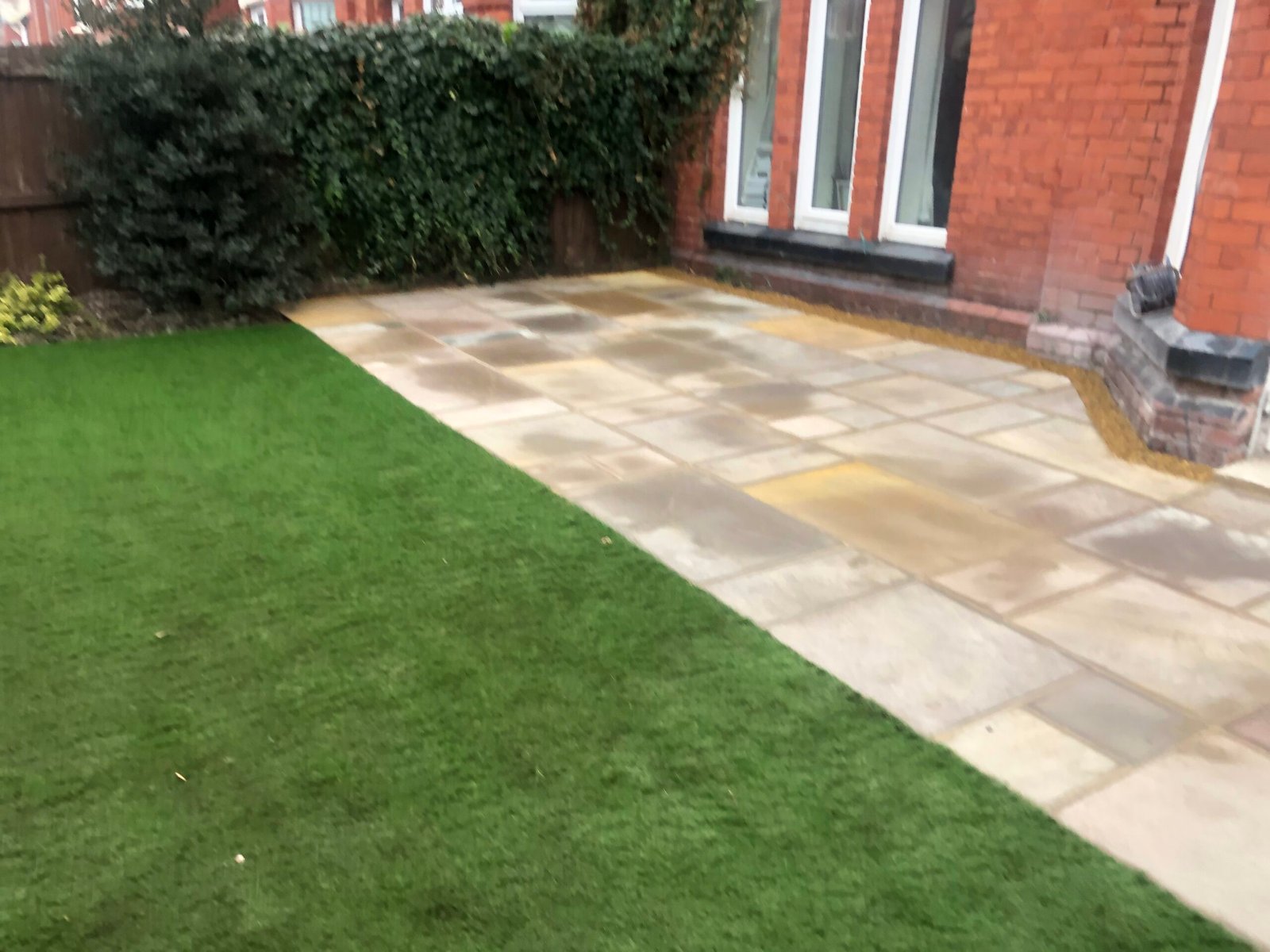
Whether you have a small town garden, traditional family home, modern property or larger landscaped garden, we can discuss patio options appropriate for the available space.
If your location is not listed, contact us to find out whether we cover your area.
How Much Does a New Patio Cost in Wirral?
The cost of a new patio in Wirral depends on the individual project.
Factors that can affect the price include:
- Size of the patio
- Paving material selected
- Existing surface
- Amount of excavation required
- Ground conditions
- Garden access
- Drainage requirements
- Number of paving cuts
- Steps and level changes
- Borders and edging
- Removal of existing paving
A small straightforward patio will naturally differ in cost from a larger project incorporating paths, steps and several garden levels.
The most accurate way to establish a price is through an individual site assessment and quotation.
Replace an Old or Tired Patio
An existing patio can become tired, uneven or outdated over time.
If the layout no longer suits your garden, replacing it provides an opportunity to rethink the entire space rather than simply changing the paving.
You may want to increase the size of the patio, move the main seating area, add a pathway or select a completely different paving style.
Replacing an existing patio can therefore be both a practical improvement and an opportunity to modernise your garden.
Why Choose a Local Wirral Patio Company?
Choosing a local patio company in Wirral allows your project to be assessed in person before installation begins.
A site visit can help identify important details such as access, measurements, ground levels, existing paving and drainage.
It also gives you an opportunity to discuss the advantages of different paving materials and how the patio might fit into the wider garden.
Every property presents different requirements, so we believe the design should be based on your particular garden rather than a standard template.
Get a Free Patio Quote in Wirral
If you are thinking about transforming your garden with a new patio, contact us to discuss your ideas.
We provide professional patio installation across Wirral, including porcelain patios, Indian sandstone paving, garden pathways, steps and other paved outdoor areas.
Whether you want a small seating area, a contemporary porcelain patio or a larger natural stone garden design, we can help plan an outdoor space suited to your property.
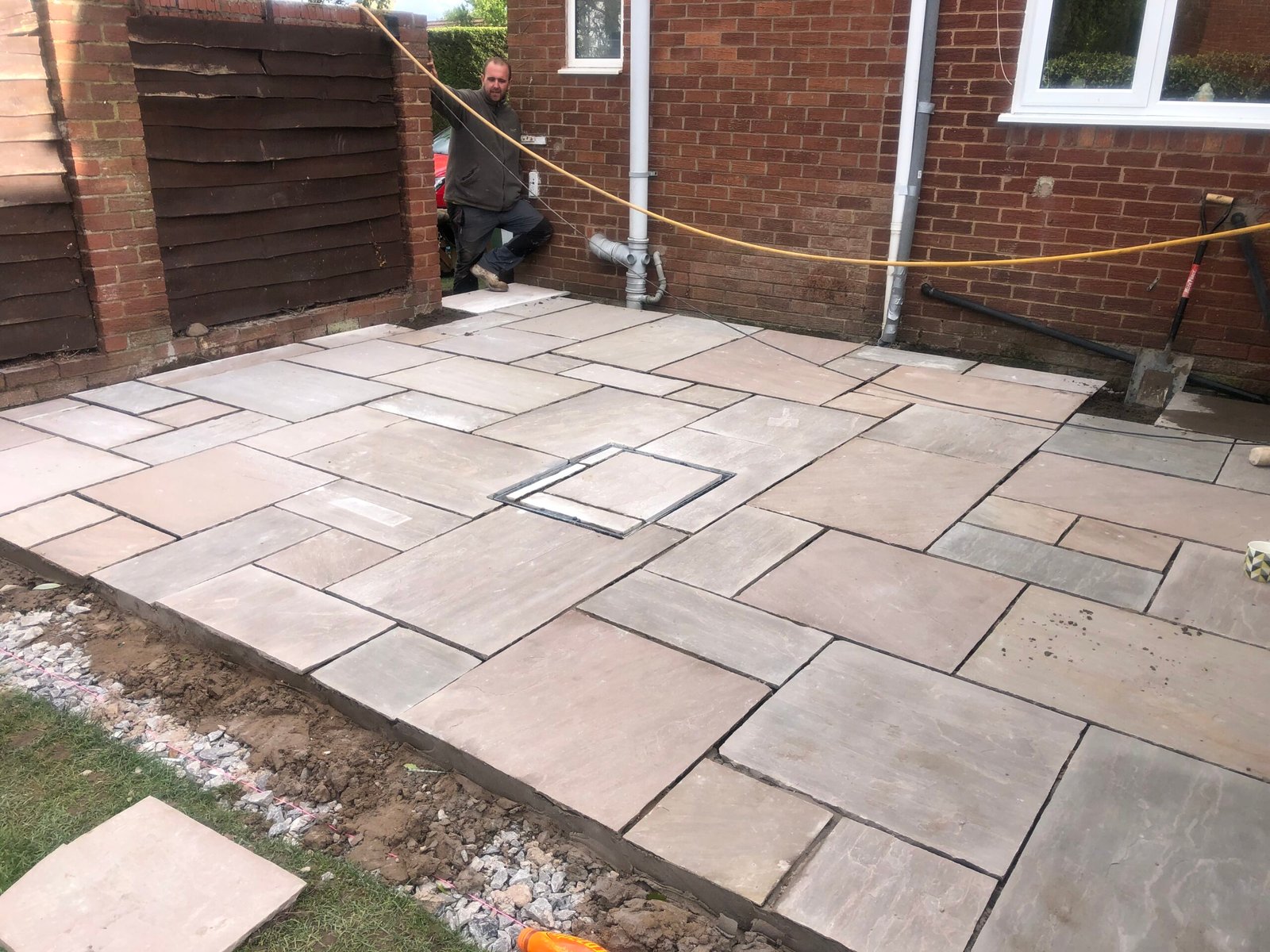
Our patio services cover Heswall, West Kirby, Hoylake, Greasby, Birkenhead, Bebington, Bromborough, Wallasey, Moreton, Upton, Prenton, Pensby, Irby and surrounding Wirral areas.
Contact us today for your free, no-obligation patio quote in Wirral.
Patios Wirral – Frequently Asked Questions
What types of patios do you install?
We install porcelain patios, Indian stone patios and other paved garden areas for residential properties throughout Wirral.
Is porcelain or Indian sandstone better for a patio?
Both can provide an excellent patio surface. Porcelain offers a cleaner and more consistent appearance, while Indian sandstone provides natural colour and variation. The right choice depends on the style you prefer.
Can you replace an existing patio?
Yes. Existing paving can be removed where required before the area is prepared for a new patio installation.
Do you install garden paths and steps?
Yes. Paths, steps and adjoining paved areas can be incorporated into the overall patio design.
Which areas of Wirral do you cover?
We provide patio installation across Heswall, West Kirby, Hoylake, Greasby, Birkenhead, Bebington, Wallasey, Moreton, Bromborough, Upton, Prenton, Pensby, Irby and surrounding Wirral locations.
Can I get a free patio quote?
Yes. Contact us to arrange a free patio quote in Wirral and discuss your preferred paving, layout and garden requirements.